
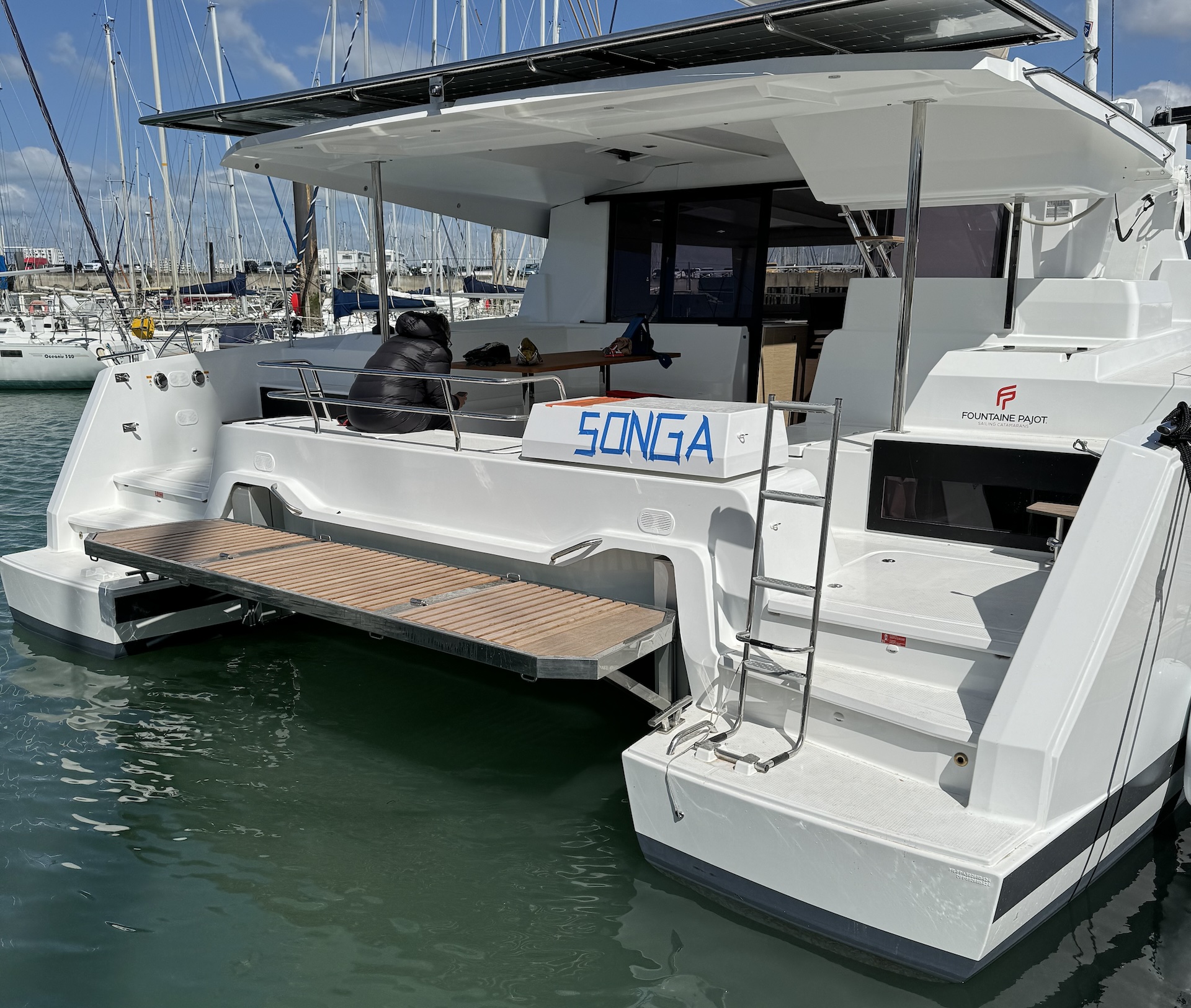
An update on the commissioning progress of our new Yacht.
Another week over and the focus last week was the electric propulsion system. There were various engineers on the boat throughout the week checking and fixing various components that make up the electric motor installation. In addition, a couple of other little jobs got done:
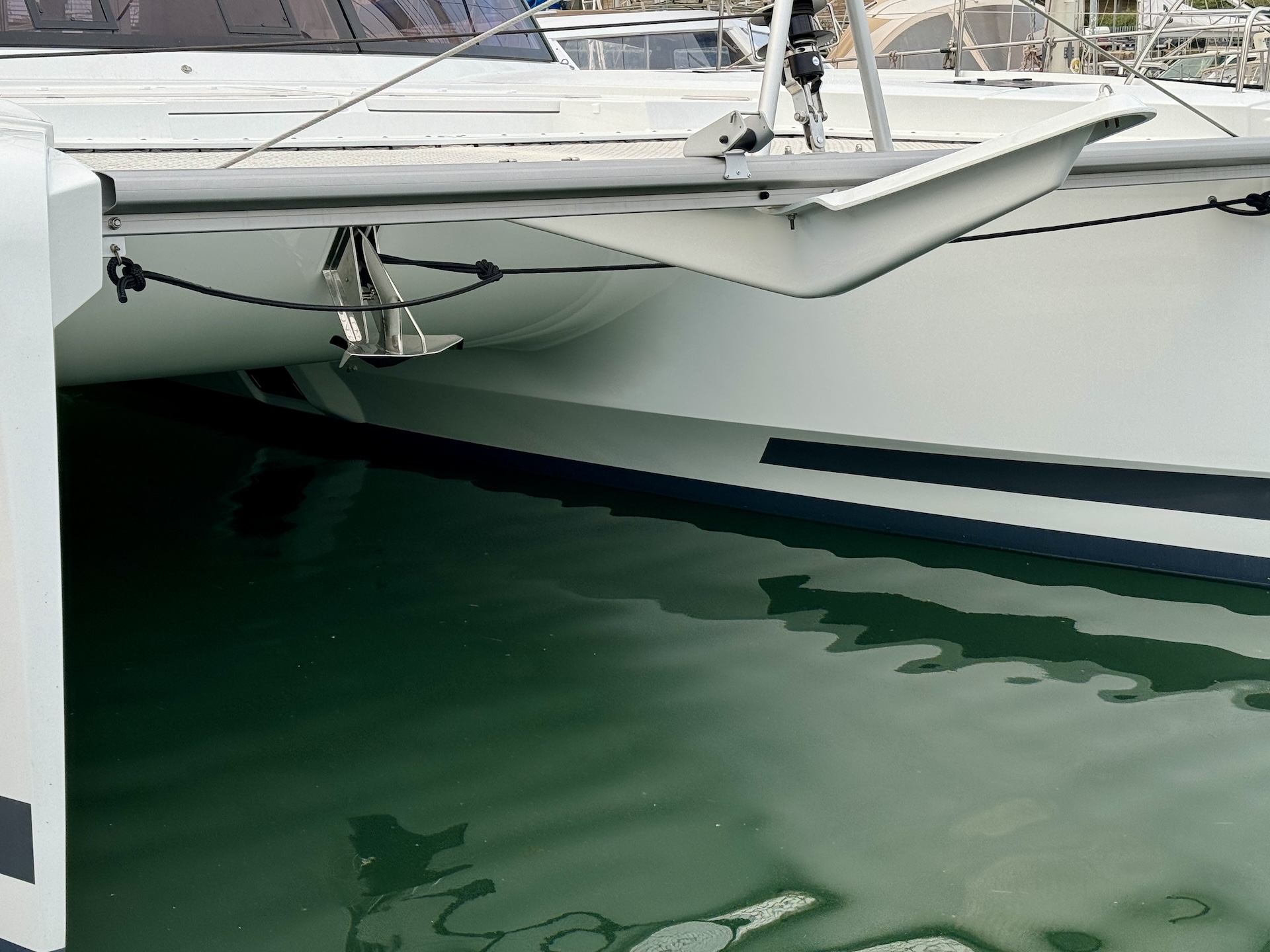
- The anchor and chain were installed. As a primary anchor we have 100 m of galvanised chain connected to an UltraMarine 35 kg anchor, which is currently considered to be one of the best anchors available.
- The life raft was installed.
- The BBQ box was installed.

The week before last, Leon arrived from the Gold Coast. He is the Service Manager for Multihull Solutions (our yacht dealer), and one of the reasons for him being in La Rochelle is to ensure that our electric motors are installed and commissioned correctly. He has gone over the installation in fine detail and discovered a number of issues that, quite frankly, would have taken us a while to identify. He has been a godsend and once again highlights the fantastic support that we get from the Australian dealer. Talking with owners from other regions we hear stories of owner’s being left to their own once they sign the purchase contract.
During the week, Leon identified:
- The monitoring system hadn’t been connected to the solar panels, so there was no way to measure how much charge was being generated.
- One of the solar panels isn’t working.
- One of the electric motors was spinning the wrong way. Apparently the wrong cable had been installed between the motor and its controller.
- The generator start battery wasn’t being charged.
- An issue in the interface between the generator and the propulsion system where the generator gets shut down soon after starting.
We also spent two afternoons being trained on how to operate the electrical system and the motors.
By the end of the week, the motors were ready for a sea trial, apart from the generator still being out of service. On Saturday, Leon made sure all the batteries were fully charged for a test sail the next morning. Sunday morning was bright and clear with about 15 knots of offshore wind (blowing from the land to the sea), and the temperature was about 7° C. A good wind with flat seas for a first sail.
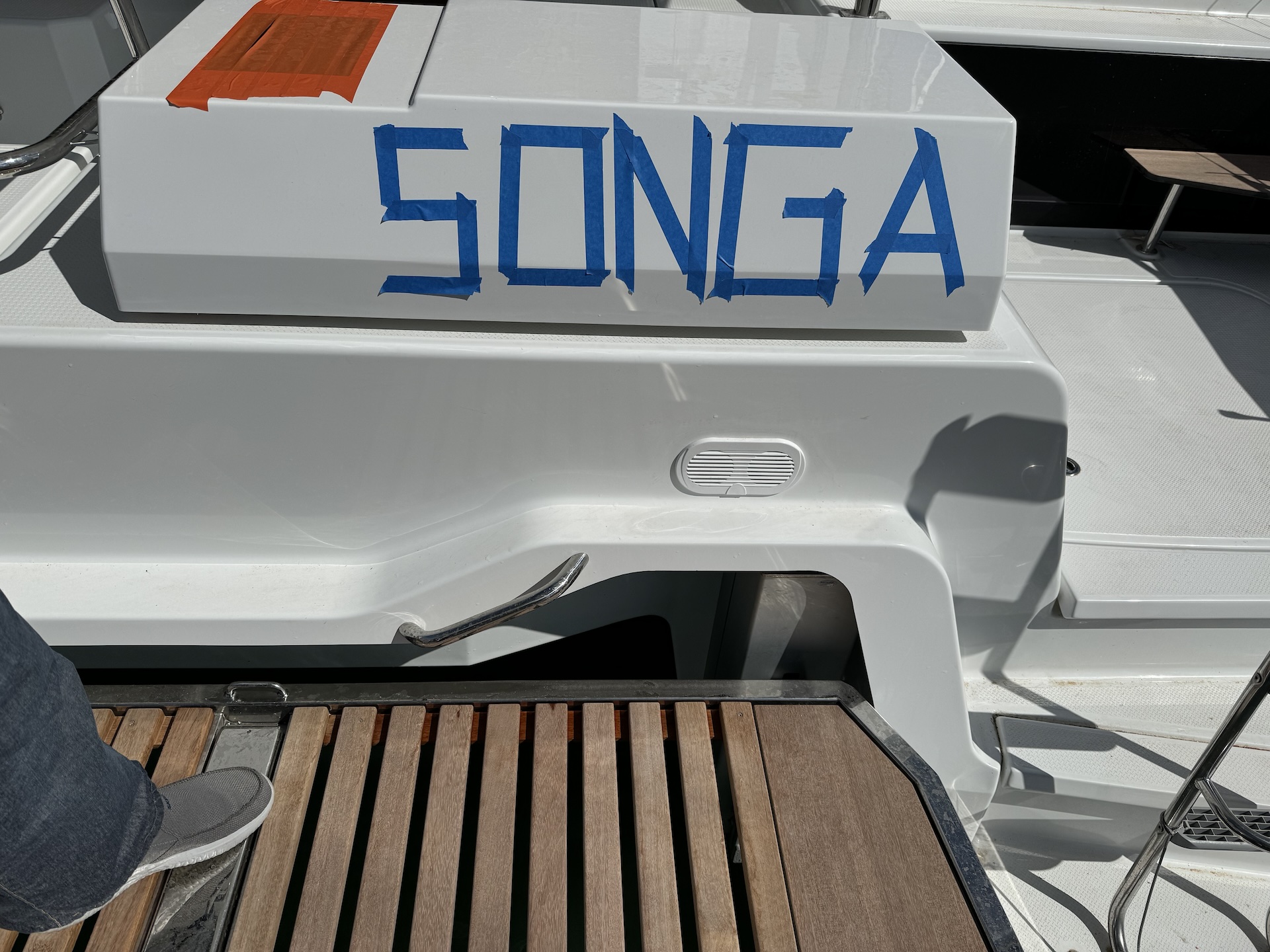
Before we could leave the marina, we had to ensure the boat was displaying its name and that we had the required safety equipment on board. So a quick job with blue masking tape put the name in place on the back of the BBQ box, and a pre-packed bag of life jackets, flares and charts satisfied the safety requirements. Also on board was Greg who is the New Yacht General Manager from Multihull Solutions.
Off we went for our first sail on our boat, and for the boat’s first sea trial of its sailing and propulsion systems. Leon was master for the day, and was responsible for testing the electric motors. Greg looked after the sails, ensuring everything had been setup and was operating correctly, and showed us how it all worked.
The motors essentially have 3 states: unpowered, powered, and regenerating. When powered they’re drawing power from the batteries to spin the propellor to move the boat. When regenerating the propellors are being spun by the water moving past and this creates a charge going into the batteries. Our estimate during the test sail was that regeneration was reducing boat speed by up to 1 knot. Even so we were consistently achieving a speed of about 7 knots and on occasion got up to 8 knots. At 8 knots the motors were generating up to 3 kW of charge. On the trip out of and back into the marina we were running the two motors at 1 kW each with a boat speed of just under 5 knots. The motors are capable of 25 kW each.
It was a fantastic couple of hours, seeing our boat out of the marina and sailing it. We came back very happy with our choice of boat, and extremely satisfied with our decision to go with the electric motors instead of diesel.
This coming week we should see the hard top installed over the helm station (steering wheel), along with the extra plumbing and electrical work we’ve ordered. If we’re really lucky, the water maker installation may also be started. We do know that the trimmer has started sewing the enclosures, but I’m not expecting those to be finished this week.
 Sailing Songa